













Rugged Phones for Construction Sites: What to Look For
TL;DR: Construction sites combine nearly every hazard a phone can face at once — repeated drops onto concrete or rebar, fine dust from cutting and demolition, gloved hands that defeat standard touchscreens, and full 10–12 hour shifts far from a charger. A standard phone in a case survives the occasional drop; it doesn't survive a year of daily job-site handling. This guide covers the specific certifications and features that actually matter for construction work, and how to match a model to your crew's budget and role without over- or under-buying.
A phone on a construction site doesn't get treated like a phone anywhere else. It rides in a tool belt through a full shift, gets set down on rebar and scaffolding, dropped from ladders more often than anyone wants to admit, and operated with gloved, often dust- or mud-covered hands. Most of the damage that ends a standard phone's life on a job site isn't one dramatic incident — it's cumulative: months of small drops, dust working into ports, and a battery that can't make it through a full shift of camera-heavy documentation. Here's what actually matters when choosing a phone built to survive that, not just marketed for it.
The Hazards Specific to a Job Site
Repeated drops, not just one. A standard phone might survive a single drop with a good case. A construction crew member drops their phone dozens of times over a project's lifespan — from ladders, scaffolding, truck beds, and just out of a pocket while climbing or carrying materials. What matters for durability testing isn't whether a device survives one drop under lab conditions, it's whether it holds up to that kind of repeated, unpredictable impact over months. This is exactly what MIL-STD-810H's Method 516.8 shock and transit-drop testing is built to simulate — see our full breakdown of what that testing actually covers.
Fine dust from cutting, grinding, and demolition. Concrete dust, drywall dust, and sawdust work into charging ports and speaker grilles over time — a slow failure mode that often doesn't show up as a dramatic breakage, but as unreliable charging or muffled audio months into ownership. This is a sealing problem, not a toughness problem, which is why the IP dust rating matters as much as any drop certification.
Gloved hands. Cold-weather gloves, cut-resistant gloves, and general work gloves don't reliably register on a standard capacitive touchscreen. Constantly stopping to remove gloves to check a blueprint, log a measurement, or answer a call is a real productivity drag — and a real safety concern when it means pulling off cut-resistant gloves mid-task.
Direct sunlight and variable temperatures. Roofing, exterior framing, and site walkthroughs happen in direct sun, where a standard-brightness display becomes unreadable. Winter job sites and enclosed concrete pours bring the opposite problem — cold enough to affect touchscreen responsiveness and, over time, battery performance.
Full shifts without convenient charging. A 10–12 hour job-site day, especially one involving heavy camera use for inspection photos, progress documentation, and safety reporting, can drain a standard smartphone battery well before the shift ends — and there's rarely a convenient outlet on an active site.
What to Look for in a Construction-Ready Phone
MIL-STD-810H shock and drop testing (Method 516.8 specifically). As covered in our MIL-STD-810H guide, "military grade" alone doesn't confirm which tests were run — ask specifically whether Method 516.8 (transit drop) was part of the testing, since that's the method most directly relevant to job-site handling.
IP68 and IP69K rating, confirmed as both, not just one. IP68 covers rain and accidental drops in water; IP69K matters specifically if equipment on your site gets pressure-washed between uses. See our IP68 vs IP69K guide for why the two aren't interchangeable.
Glove-touch mode. Look for this as a named, adjustable setting rather than an assumed feature — sensitivity varies meaningfully between implementations, and it's worth testing with your crew's actual gloves before a full rollout.
Sunlight-readable display with a stated peak brightness. "Bright display" as marketing language means little without a number — look for a specific nit rating in the spec sheet.
Battery capacity matched to actual shift length and camera use. 10,000mAh is a reasonable baseline for a standard shift with moderate use; crews doing heavy inspection photography or working 12-hour days should look toward 15,000mAh or above.
Loud speaker output. Job sites run loud — generators, saws, machinery. A speaker rated for high decibel output is the difference between catching a call across a site and missing it entirely.
Camera performance in mixed lighting. Inspection and safety documentation happens in inconsistent lighting — shadowed interiors, bright exteriors, low-light early starts. A camera that only performs well in ideal conditions limits the usefulness of photo-based reporting.
Which Ulefone Armor Model Fits a Construction Crew?
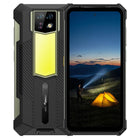
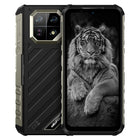
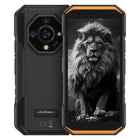
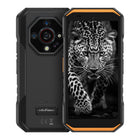
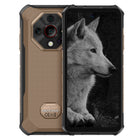
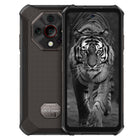
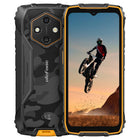
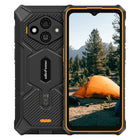
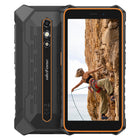
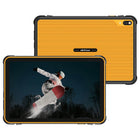
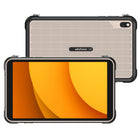
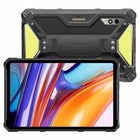
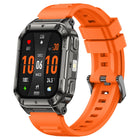
Outfitting an entire crew on a fixed budget: The Armor X Series carries full IP68/IP69K and MIL-STD-810H certification at a meaningfully lower per-unit cost than flagship models — the practical choice when consistent, verified durability across every device matters more than top-tier specs on any single one.
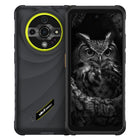
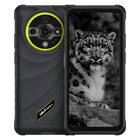
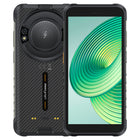
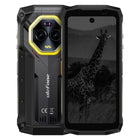
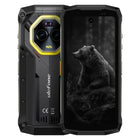
Long shifts on loud, dusty sites: The Armor 26 Ultra pairs a 15,600mAh battery with a 121dB speaker, aimed specifically at full-shift endurance in high-noise environments.
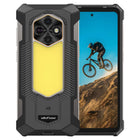
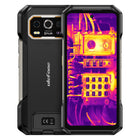
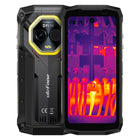
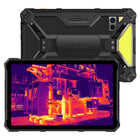
Crews that include electricians or HVAC technicians alongside general labor: The Armor 28 Ultra's thermal imaging variant adds functional diagnostic value beyond standard photography — useful for a subset of a construction crew, not the whole team. See our thermal imaging guide for who that's actually worth the added cost for.
For the full model-by-model comparison table across the Armor lineup, see our complete rugged phone buying guide.
Final Thoughts
Construction work stresses a phone in ways a standard consumer device — even in a heavy-duty case — isn't built to withstand indefinitely. The certifications worth checking are specific: MIL-STD-810H Method 516.8 for drop resistance, both IP68 and IP69K for dust and water, and a battery capacity that actually matches your shift length and camera use, not just a large-sounding number. Match the specific model to the specific role on your crew rather than buying uniformly — a general laborer and a diagnostic-focused technician don't need the same device.
FAQ
Q: Do I need a rugged phone for construction, or is a case enough? A: A case improves single-drop protection but doesn't seal ports against dust and water ingress or reinforce internal component mounting against repeated impact over time. For daily job-site exposure across months of use, a phone independently tested to MIL-STD-810H and IP68/IP69K is more reliable than a case on a standard phone. See our full rugged vs. regular smartphone comparison for the cost breakdown.
Q: What battery capacity is actually enough for a full construction shift? A: For a standard 10-hour shift with moderate camera and app use, 10,000–12,000mAh is typically sufficient. Shifts extending to 12 hours, or roles involving heavy inspection photography and documentation, generally need 15,000mAh or more to comfortably last without a mid-day charge.
Q: Does glove mode work with all types of work gloves? A: Sensitivity varies by glove thickness and material. Most glove-touch implementations are tuned for standard-thickness work gloves and may respond less reliably with very thick insulated winter gloves — worth testing with your crew's specific gloves before a full rollout rather than assuming universal compatibility.
Q: Is it worth paying more for MIL-STD-810H testing if the phone already has an IP68 rating? A: Yes — they test entirely different things. IP68 confirms dust and water sealing; it says nothing about whether the device survives being dropped from a ladder or vibrating on machinery all day. A construction-ready phone needs both certifications, not one in place of the other.
Q: How do I outfit an entire crew without overspending on features they don't need? A: Match the model to the role rather than buying uniformly across the team. General laborers and site supervisors are often well-served by the Armor X Series' certified baseline durability, while roles doing diagnostic or inspection work benefit more from a higher-tier model with additional camera or sensor capability — see the full model comparison table in our buying guide.