
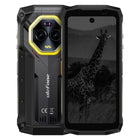
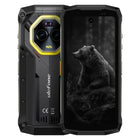



Night Vision Camera on Rugged Phones: How It Works & Who Needs It
TL;DR:A "night vision camera" on a rugged phone is a second, dedicated image sensor — not a thermal sensor — paired with algorithm-based low-light processing (Ulefone calls its version NightElf Ultra 3.0 on the Armor 27T Pro+) that lets the phone capture clear images even in completely dark environments. Four current Ulefone Armor models — the Armor 22 Pro, Armor 24 Pro, Armor 27T Pro+, and Armor 27T+ — pair their main camera with a 64MP night vision sensor (OV64B / OV64B1B). It's still a different technology from the FLIR thermal imaging module on the Armor 27T Pro+, Armor 28 Ultra Thermal, and Armor 29 Pro Thermal — night vision reconstructs what a scene looks like even with no visible light to work with; thermal reads heat signatures instead of light entirely.
Walk a warehouse aisle after the overhead lights cut out, or try to photograph a job-site issue at 2 a.m. with a regular phone camera, and you get the same result: a black rectangle with maybe a smear of noise where the flash bounced off something close. Rugged phone makers have started answering that specific problem with a "night vision camera" — a second rear sensor built to keep working when there's almost no light left to work with.
It's a real, distinct piece of hardware, but the name causes a lot of confusion, mostly because people mix it up with thermal imaging, a completely different technology that some of the same rugged phones also offer. This guide separates the two clearly, then looks at which current Ulefone Armor models actually have a night vision sensor and who gets real value out of it.
What Is a "Night Vision Camera" on a Rugged Phone?
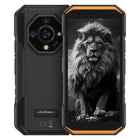
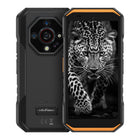
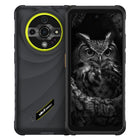
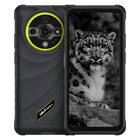
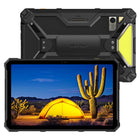
A night vision camera on a rugged phone is a secondary rear-facing image sensor, paired with the phone's main camera, that's tuned specifically for low-light capture rather than daylight detail. Instead of relying only on the main sensor plus a flash, the phone switches to this dedicated sensor and a purpose-built shooting mode — on Ulefone's Armor lineup, this shows up in the camera app literally as Night Vision Mode, sitting alongside Normal Mode, Film Mode, and the other standard shooting modes.
The point isn't a gimmick photo filter. It's a sensor that gathers more usable signal per pixel in near-dark conditions, so a photo or video clip taken in a dim stairwell, an unlit yard, or a warehouse corner still shows real detail instead of noise — useful for documenting a job site issue, checking a delivery drop point, or just seeing where you're walking.
How the Night Vision Sensor Actually Works
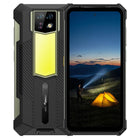
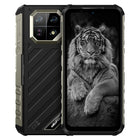
On the Ulefone models that include it, the night vision sensor is a 64MP unit — either the OmniVision OV64B or the closely related OV64B1B, depending on the model — sitting next to the phone's main camera (a Sony IMX682 on the Armor 22 Pro and Armor 24 Pro, or a 50MP Samsung GN1 on the Armor 27T Pro+ and Armor 27T+).
What makes this different from just cranking up ISO on a normal camera is the dedicated processing behind it. On the Armor 27T Pro+, Ulefone names this the NightElf Ultra 3.0 algorithm — a processing pipeline built specifically to pull a clear, usable image out of the sensor even in a completely dark environment, rather than the noisy, mostly-black frame you'd get from a standard camera pushed past its limits. The result, per Ulefone's own product pages for the Armor 27T Pro+ and Armor 24 Pro, is a night vision camera that stays functional with effectively no ambient light at all — not just "better than the main camera in the dark," but usable in true darkness.
Night Vision vs. Thermal Imaging: They're Not the Same Thing
This is the mix-up worth clearing up directly, because Ulefone also sells rugged phones with genuine thermal imaging hardware, and the two get lumped together constantly — especially now that both can technically operate with no visible light present:
- Night vision camera — a dedicated image sensor plus algorithm processing (like NightElf Ultra 3.0) that reconstructs what a scene actually looks like, even in a completely dark environment. The output is a normal-looking photo or video: shapes, faces, text, layout — just captured where your eyes and a regular camera couldn't manage it.
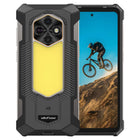
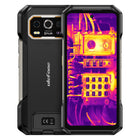
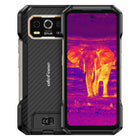
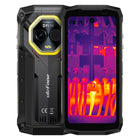
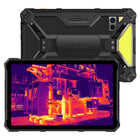
- Thermal imaging camera — a separate sensor (Ulefone's Armor 27T Pro+, Armor 28 Ultra Thermal, and Armor 29 Pro Thermal use FLIR's MyFLIR Pro module) that doesn't image light at all — it reads heat signatures. The output is a temperature map, not a normal photo, which is what lets it spot a warm body, an overheating component, or a heat leak that even a night-vision-enhanced camera can't detect, and see through some smoke or haze that would still obscure a regular image sensor.
Put simply: night vision answers "what does this look like right now," even without light to see it by. Thermal answers "what's warm and what's not," regardless of light or a lot of visual obstruction. The Armor 27T Pro+ carries both, covering both questions in one device. For a deeper look at the thermal side specifically, see Ulefone's Thermal Imaging Phone Buying Guide and the Thermal Imaging Phone Comparison.
Ulefone Armor Models With a Dedicated Night Vision Camera
Based on current official spec sheets, four Armor models include a 64MP night vision sensor alongside the main camera:
| Model | Main Camera | Night Vision Camera |
|---|---|---|
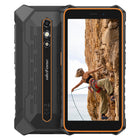
| Armor 22 Pro | 64MP (Sony IMX682) | 64MP night vision (OV64B) |
| Armor 24 Pro | 64MP (Sony IMX682) | 64MP night vision (OV64B1B) |
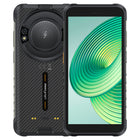
| Armor 27T Pro+ | 50MP (Samsung GN1) | 64MP night vision (OV64B) — plus FLIR thermal module |
| Armor 27T+ | 50MP (Samsung GN1) | 64MP night vision (OV64B) |
(The Armor 27T Pro+ and Armor 27T+ share essentially the same camera and night vision hardware; the Pro+ adds 5G and the FLIR thermal sensor on top.)
Who Actually Needs a Night Vision Camera
This isn't a feature every rugged phone buyer needs, but a few groups get consistent, practical use out of it:
Construction workers and field technicians doing early-morning or after-hours site work, where documenting an issue — a crack, a leak, a safety hazard — can't always wait for daylight.
Warehouse and logistics workers moving through poorly lit storage areas, loading docks, or yards during night shifts, where a normal phone camera struggles to confirm a label, a pallet position, or damage on arrival.
Security and patrol staff who need to record what they're seeing during a night round, without carrying separate night-vision equipment.
Night couriers and delivery riders navigating dim streets, unlit building entrances, or drop-off points late in the evening, where a quick, usable photo of a delivery or an access point matters.
If your work happens mostly in daylight or well-lit indoor spaces, this is a nice-to-have rather than a deciding factor — the phone's IP68/IP69K rating and MIL-STD-810H durability will matter more day to day.
Getting the Most Out of Night Vision Mode
A few practical notes for using it well: hold the phone steady, since the algorithm processing behind a clear low/no-light shot generally involves multi-frame capture, which is more sensitive to motion blur than a normal daylight shot. And if what you actually need is to detect a heat source rather than see a normal image of a scene — a person, an animal, an overheating machine, something hidden by smoke or fog — that's a job for the thermal camera on the Armor 27T Pro+ and Ulefone's dedicated thermal models, not the night vision sensor.
FAQ
Is a night vision camera the same as a thermal camera?
No. A night vision camera is a visible-light image sensor optimized for low light; it still needs some ambient light to produce an image. A thermal camera detects heat signatures and works in complete darkness because it isn't reading light at all.
Which Ulefone Armor phones have a night vision camera?
The Armor 22 Pro, Armor 24 Pro, Armor 27T Pro+, and Armor 27T+ all include a 64MP night vision sensor (OV64B or OV64B1B) alongside the main rear camera.
Does the Armor 27T Pro+ have both night vision and thermal imaging?
Yes. It's the one current model that pairs a FLIR thermal imaging module with a 64MP night vision camera, covering both the "see heat in total darkness" and "see detail in near-darkness" use cases in one phone.
Does the night vision camera work in complete darkness with zero light?
Yes — per Ulefone's product pages for the Armor 27T Pro+ and Armor 24 Pro, the night vision camera is built to capture clear images even in completely dark environments, using its dedicated 64MP sensor and processing such as the NightElf Ultra 3.0 algorithm, rather than an active infrared illuminator or heat sensor.
What resolution is the night vision sensor?
64MP on every current Ulefone model that includes one, using either the OmniVision OV64B or OV64B1B sensor depending on the phone.